


TAAANZ GROUP CONFERENCE
Wellington, Aotearoa New Zealand
Saturday 5th & Sunday 6th December 2026
-
Keynote speaker: Seán Manning TSTA(P) - Aotearoa New Zealand
-
Venue: Te Wharewaka o Pōneke Function Centre, Wellington, Aotearoa New Zealand
-
Conference Attendance: 14 CPD hours


Confirmed Workshop Facilitators:
Isabelle Sherrard / with Professor Keith Tudor TSTA(P) - Aotearoa New Zealand
Gerry Pyves TSTA(P) - Aotearoa New Zealand
Jr-Earn Lam PTSTA(E) - Singapore
Dr Mandy Lacy TSTA(O,C) - Aotearoa New Zealand
Professor Keith Tudor TSTA(P) - Aotearoa New Zealand
Seán Manning TSTA(P) and Matt Bird CTA (Psychotherapy) - Aotearoa New Zealand
Conference Programme
Saturday 5th December 2026
09:00 Registrations
09:30 Mihi whakatau
Session 1
Disruption as the Object of Psychotherapy
11:00 Morning tea
11:30 Session 2
Isabelle Sherrard & Professor Keith Tudor
Ancestors of the mind: A conversation with Isabelle Sherrard facilitated by Keith Tudor
13:00 Lunch break
14:00 Session 3
Beyond Words
15:30 Afternoon tea
16:00 Session 4
A Different Kind of LOL: Laughter, OK-ness and Learning in Transactional Analysis
17:30 End of Sessions
17:45 AGM followed by Book Launch of
Kaurangarua: Unity through diversity in Transactional Analysis a TAAANZ 2024 Conference Publication (light refreshments will be served)
19:00 End of Day 1
Sunday 6th December 2026
09:30 Session 5
Legacy, Legitimacy, and Identity
11:00 Morning tea
11:30 Session 6
The Secret Garden Within You and Others
13:00 Lunch break
14:00 Session 7
Panel Discussion on Groups: Chair John Savage (New Zealand), Rhae Hooper (Australia), Sean Manning (New Zealand) and Jr-Earn Lam (Singapore)
15:30 Afternoon tea
16:00 Session 8
Poroporoaki facilitated by Seán Manning and Matt Bird
17:30 End of Conference
NOTE: Morning and afternoon tea are provided. Lunch break will give you the opportunity to enjoy local cafes.
Pre and Post Conference Events
Conference Workshops
Rather than centring on a single theme, this conference invites us into a shared journey of exploration and learning. Facilitators and participants will travel together through the programme, with no concurrent sessions, allowing everyone to engage in the same workshops and experiences. This format creates a unique opportunity for connection, dialogue, and collective discovery.

Disruption as the Object of Psychotherapy
Seán Manning TSTA(P) - Aotearoa New Zealand
Transactional analysis was born in the heyday of American neoliberal optimism, with individual autonomy as its desirable and achievable promise. Berne wrote of winners and losers and banal scripting. A winner was an individual (henceforth a “subject”) who could escape their programming with the aid of a few tools stated in ordinary, everyday language. Subjects could think and therefore could be. It is an idea that has permeated psychological interventions since the rapid development of widespread interest in the inner world that took place from about 1960.
At the same time, in Europe, a philosophy known as postmodernism was emerging which suggested exactly the opposite, that “everything we do, feel and think arises out of relations of power and resistance.” (Manning et al., 2025 in press). In other words, we are constituted by forces over which we do not have autonomous control. In certain environments, most particularly in what Goffman (1968) called “total institutions” such as prisons, the possibilities for individual autonomy are clearly limited or non-existent. The French postmodern philosopher Michel Foucault, using the prison to illustrate his thesis (1975/1995) suggested that this condition applies everywhere. He extended his argument to describe the ways we govern ourselves to comply with the discourse created by power relations, but even in governing ourselves, we are limited to acting within an apparatus, or dispositif, determined by power relations, that governs how we govern ourselves (Foucault, 1978; Rose, 1998, 1999, 2001). This is not dissimilar to some models of script, especially if we include Drego’s notion of the cultural Parent (1983) and Steiner’s script matrix (1974), in which everything, even the adult ego state, is programmed.
What happens, then, to transactional analysis in general and TA psychotherapy in particular if we remove the idea of autonomy as the object of intervention? We know that psychotherapy has an impact; what if that impact is disruption, not of the individual subject, but of the discourse that subjectifies us, with the unpredictability that accompanies all disruption?
Bibliography
Drego, P. (1983). The Cultural Parent. Transactional Analysis Journal, 13(4), 224-227.
Foucault, M. (1975/1995). Discipline and punish : the birth of the prison. Vintage Books.
Foucault, M. (1978). The history of sexuality, Vol. 1, an introduction (The Will to Knowledge) (R. Hurley, Trans.). Pelican books.
Goffman, E. (1968). Asylums. Penguin.
Manning, S., Nicholls, D. A., & Day, E. (2025 in press). Working with Bad Men: TA approaches to the discursively constructed criminal self. In K. Tudor & M. Bird (Eds.), Tĩkanga Rua. TAAANZ.
Rose, N. (1998). Inventing our selves: psychology, power, and personhood. Cambridge University Press.
Rose, N. (1999). Governing the soul: the shaping of the private self (2nd ed.). Free Association Books.
Rose, N. (2001). The Politics of Life Itself. Theory Culture & Society, 18((6)), 1-30.
Steiner, C. (1974). Scripts People Live. Bantam.
Speaker Bio:
Seán Manning TSTA(P) is a registered psychotherapist in private practice in Otepoti/Dunedin, contracting to the Moana House therapeutic community for male offenders and the Stopping Violence programme Dunedin. He is a provider and assessor for ACC and is DAPAANZ registered as a practitioner and as a supervisor. Before becoming a psychotherapist Sean qualified in psychology and social work. He passed the TSTA exams in 1999 and achieved an MSc in TA Psychotherapy in 2001. Sean is currently pursuing a Doctorate in Health Science. Sean has published regularly, most recently a series of pieces on criminal subjectivity and psychotherapy and has served on a number of governance boards, including the ITAA and NZAP (now APANZ) including two terms as president of the latter.

Ancestors of the mind: A conversation with Isabelle Sherrard facilitated by Dr Keith Tudor
Isabelle Sherrard / with Professor Keith Tudor TSTA(P) - Aotearoa New Zealand

This group workshop, which takes the form of a conversation followed by questions and discussion, offers a narrative view of an important part of the history of transactional analysis (TA) in Aotearoa New Zealand. Specifically, it focuses on Evan Sherrard’s time studying TA in the United States of America in the 1970s and how he brought TA back to this country; Isabelle’s own relationship with TA, including her work with Evan especially on grief, death and dying; and, most recently, Isabelle’s involvement in The Book of Evan (which Keith curated and edited).
Bios:
Isabelle Sherrard is Registered Nurse and is now retired from clinical and educational work in nursing. She has had a leisurely interest in TA as her husband Evan was actively involved firstly in training and then in his practice of psychotherapy. She is now a busy JP, a poor golfer, and reads more than she used to. Friends often talk with her about their health concerns and she seems to be a pretty good listener. She continues to think like a nurse, with a TA flavour - thanks to Evan's influence.
Professor Keith Tudor PhD, CQSW, Dip. Psychotherapy, CTA(P), TSTA(P) is professor of psychotherapy at Auckland University of Technology, Aotearoa New Zealand. He has been involved in TA for over 35 years, and is the author of over 100 publications on TA, including four books. In 2020, he was the recipient (with Graeme Summers) of the Eric Berne Memorial Award for their work on co-creative TA and design in TA. Keith has a small private practice in West Auckland as a health care provider and transactional analyst.

Beyond Words
Gerry Pyves TSTA(P) - Aotearoa New Zealand
The seminal work of Wilma Bucci* has identified three core ‘referential systems’ for all human beings. These comprise the ‘analytic’ system (thinking, language), the ‘symbolic’ system (metaphor/narrative/images) and the ‘sub-symbolic’ system (somatic, procedural). Her work suggests that effective therapy involves utilising and integrating all three systems.
When either the analytical or narrative approaches fail to produce the outcomes contracted for, therapists often discover that the missing link is work that is inclusive of the body. Whilst much is spoken about ‘embodied practice’ and ‘body-awareness’, in reality, it is a paradoxical quest: to ‘speak’ (or write) of a system that has no words.
In this post-prandial session we will explore some gentle body-connecting movements and exercises that every therapist can use to build and enhance our non-verbal awareness of this sub-symbolic referential system. For this reason, please bring a blanket and a pillow/cushion for floor exercises.
*Bucci, W. (1997) Psychoanalysis and Cognitive Science; a multiple code theory Guildford Press
Speaker Bio:
Since the age of 28, Gerry has been a creative innovator in the realm of the body, touch and narrative approaches that can be used in therapy. He writes: “Now that I am a TSTA, I feel sufficiently qualified to share my ideas with transactional analysts and provide a solid theoretical explanation for my approach.” He has been in full time clinical practice for over forty years and is the author of books on bodywork, fairy tales and the basic concepts of transactional analysis. His latest book “Touching Trauma, Building Resilience” explores the neuroscience of touch and trauma. He can be contacted at: hello@gerrypyves.com.

A Different Kind of LOL: Laughter, OK-ness and Learning in Transactional Analysis
Jr-Earn Lam (PTSTA) - Singapore
In Principles of Group Treatment, Berne described Adult laughter as the “laugh of insight” (Berne, 1966). This workshop explores the different types of laughter in TA theory. It also examines the relationship between laughter, humour and OK-ness, and the different ways that humour can show up in a learning environment. This is an experiential and interactive workshop. Participants will be invited to explore and discuss how different cultures define and impact humour. They will also be invited to explore their own relationship with humour, how it can act as a barometer for OK-ness (or not), particularly in a learning space.
Speaker Bio:
Jr-Earn Lam is a PTSTA in the Education field based in Singapore. Earn is the co-founder of the Southeast Asian Centre for Transactional Analysis (SEATA), which has a dream of growing the TA community in Southeast Asia. She is also the Director of Learning in SeraphCorp Institute, a Singapore-based leadership consulting firm.

Legacy, Legitimacy, and Identity
Professor Keith Tudor TSTA(P) - Aotearoa New Zealand
In this workshop, I present a critical view of legacy, legitimacy, and identity with regard to transactional analysis. I consider legacy both in terms of what we have inherited from Eric Berne and the first and second generation of transactional analysts, and also with regard to what we are leaving for the next generation.
In the context of research which acknowledges the significance of extra-therapeutic factors and the therapeutic relationship over theoretical orientation and/or modality, I consider the legitimacy of TA in relation to recognition, and research. I will make some distinctions between the need for recognition, and the push for certain forms of regulation, especially through the state.
Finally, with regard to identity – or, more, accurately, identities – I discuss how our legacy and questions of legitimacy impact on our identities as transactional analysts, and how we include and exclude diverse aspects of our histories as well as the present. In doing so, I will also reclaim the view of TA as a social psychology and, therefore, transactional analysts as social, critical, and radical psychologists.
The workshop will take the form of a short paper, delivered in three parts, interleaved with activities, and small and large group discussion.
Speaker Bio:
Professor Keith Tudor, PhD, CQSW, Dip. Psychotherapy, CTA(P), TSTA(P) is professor of psychotherapy at Auckland University of Technology, Aotearoa New Zealand. He has been involved in TA for over 35 years, and is the author of over 100 publications on TA, including four books. In 2020, he was the recipient (with Graeme Summers) of the Eric Berne Memorial Award for their work on co-creative TA and design in TA. Keith has a small private practice in West Auckland as a health care provider and transactional analyst.
The Secret Garden Within You and Others
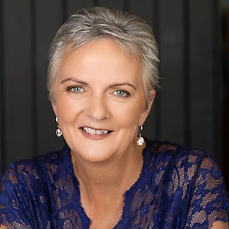
Dr Mandy Lacy TSTA(O,C) - Aotearoa New Zealand
Creativity is more than artistic expression; it is a fundamental human capacity for growth, adaptation and meaning-making. Eric Berne's concepts of physis and the Secret Garden provide a powerful Transactional Analysis framework for understanding our innate drive towards health, vitality and authentic self-expression. Contemporary neuroscience increasingly supports this perspective, demonstrating that engaging in creative processes can enhance wellbeing, emotional regulation, resilience and present-moment awareness.
Through reflective exercises, TA theory, client vignettes and practical applications, participants will deepen their understanding of creativity as a therapeutic and developmental resource. They will leave with practical ideas for integrating creative approaches into their personal lives and professional practice, supporting both their own wellbeing and the growth of those with whom they work.
Speaker Bio:
Mandy Lacy PhD is a Teaching and Supervising Transactional Analyst (TSTA) in both the organisational and counselling fields. She works across these domains through her private practice in counselling, coaching, and supervision, alongside organisational consultancy and training specialising in transformation, change management, and benefits realisation. Mandy also teaches and supervises business school Master's research students and provides TA training and supervision. Creativity is a central theme in her personal and professional work, supporting individuals and organisations to navigate change and discover new possibilities.


Closing Poroporoaki
Seán Manning TSTA(P) and Matt Bird CTA (Psychotherapy) - Aotearoa New Zealand
The Poroporoaki will provide a space for us each to reflect, discuss, and share our experiences of the whanaungatanga and learning of the weekend. We will have a chance farewell our colleagues, celebrate our examinees, and reflect on what has been as we move toward what is to come.
Bios:
Seán Manning TSTA(P) is a registered psychotherapist in private practice in Otepoti/Dunedin, contracting to the Moana House therapeutic community for male offenders and the Stopping Violence programme Dunedin. He is a provider and assessor for ACC and is DAPAANZ registered as a practitioner and as a supervisor. Before becoming a psychotherapist Sean qualified in psychology and social work. He passed the TSTA exams in 1999 and achieved an MSc in TA Psychotherapy in 2001. Sean is currently pursuing a Doctorate in Health Science. Sean has published regularly, most recently a series of pieces on criminal subjectivity and psychotherapy and has served on a number of governance boards, including the ITAA and NZAP (now APANZ) including two terms as president of the latter.
Matt Bird CTA (Psychotherapy) has a background in addiction treatment, primarily working in residential settings and therapeutic communities, working as a clinician, leader, and consultant. Living and working in Ōtepoti | Dunedin, Matt now runs a private practice working with individuals and groups.
The following are taking place at St Andrews, Wellington:
Pre-Conference Examinations
Friday 4th December 2026
Post-Conference Workshop
A Psychotactile Approach to Trauma
Monday 7th & Tuesday 8th December 2026